
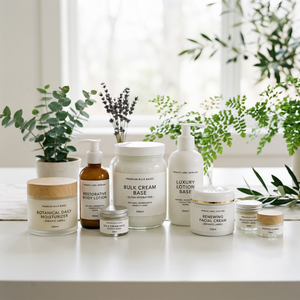

How to Start a Skincare Line in Canada and the USA: Ingredients, Regulations, and Your First Batch
Starting your own skincare line is exciting. You have an idea, perhaps a few ingredients you love, and a vision of seeing your products on store shelves or in customers' hands.
But before you invest in beautiful packaging, order hundreds of jars, or develop an entire collection, there's a more important question to answer: Can you create one great product that people genuinely want to buy?
At Sunrise Botanics, our experience supplying botanical ingredients, essential oils, carrier oils, and raw materials to makers has shaped how we think about starting a skincare business.
Our advice is simple: start focused, formulate carefully, test your product, keep your inventory lean, and invest in finding customers before scaling production.
Whether you're launching a skincare brand in Canada or the United States, this guide walks you through ingredient sourcing, product development, cosmetic regulations, first-batch planning, and the business decisions that can help you build something sustainable.
1. Start With One Clear Skincare Focus
One of the biggest mistakes aspiring skincare entrepreneurs can make is trying to launch too many products at once.
It's tempting to imagine an entire skincare collection: facial serums, moisturizers, body butters, cleansers, lip balms, and specialty treatments. But every additional product introduces more ingredients, packaging requirements, testing costs, inventory, and operational complexity.
Our recommendation at Sunrise Botanics is to choose one clear focus and build around it.
Perhaps you want to create botanical body oils, minimalist facial oils, or rich body butters. Start by identifying a specific customer, their preferences, and what makes your product different.
For example, instead of launching six unrelated products, consider developing one signature botanical body oil with a distinctive sensory experience.
You can experiment with the texture, absorption, scent, and packaging until you've developed something customers enjoy using.
Once that product has demonstrated demand and you have established a reliable production process, you can consider complementary products.
The objective isn't to launch the largest collection. It's to establish a product that earns its place in the market.
2. Choose Ingredients That Support Your Product Vision and Budget
Ingredient selection is one of the most enjoyable parts of skincare formulation, but it can also become one of the most expensive.
There are countless botanical oils, butters, waxes, emulsifiers, extracts, and specialty ingredients available. It's easy to get carried away purchasing ingredients that sound interesting without having a clear formulation plan.
At Sunrise Botanics, we encourage makers to work with suppliers that offer variety, flexible purchasing quantities, and different price points.
During the development stage, flexibility matters more than purchasing large volumes at the lowest possible unit cost.
Understand the Main Types of Skincare Ingredients
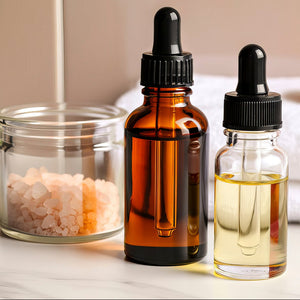
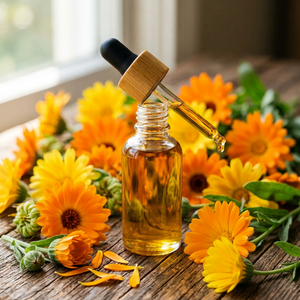
Carrier oils such as jojoba, sunflower, sweet almond, and grapeseed oils are commonly used in facial oils, body oils, and other oil-based formulations. Each has different characteristics, including viscosity, skin feel, oxidative stability, and cost.
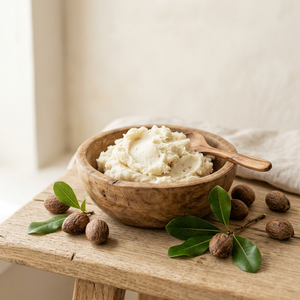
Cosmetic butters, including shea and cocoa butter, can contribute richness and structure to balms and body butters.
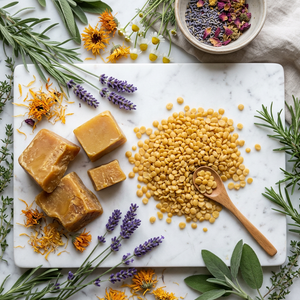
Waxes can help create firmness, modify texture, and influence how a product applies to the skin.
Emulsifiers are essential when developing many products that combine water and oil, such as creams and lotions.
Preservatives are especially important for water-containing formulations, where microbial contamination can present a safety risk. A product's preservation system must be appropriate for the complete formulation and supported by suitable testing.
Essential oils and fragrance oils can provide a distinctive sensory experience, but they must be evaluated for safe dermal use, concentration limits, sensitization risks, and applicable fragrance allergen requirements (think IRFA).
Natural ingredients are not automatically safe at every concentration. Ingredient safety depends on formulation, exposure, intended use, and the finished product.
What to Ask Your Ingredient Supplier
A reliable supplier should help you make informed purchasing decisions rather than simply sell you larger quantities.
Look for clear ingredient identities, appropriate specifications, traceability, lot information, and relevant technical documentation.
Depending on the ingredient, this may include a Certificate of Analysis (COA), Safety Data Sheet (SDS), allergen information, or other supporting documents.
A COA can help establish whether a supplied batch meets specified quality parameters. However, a supplier's COA does not replace testing or safety substantiation for your finished skincare product.
For fragrance materials, applicable IFRA documentation can also help formulators assess usage restrictions, although it is not a substitute for a complete product safety assessment.
Don't Stockpile Ingredients Before You Need Them
Imagine you're developing a botanical facial oil using three carrier oils and an optional aromatic component.
You could purchase several litres of each ingredient immediately. That might lower the price per millilitre, but it also ties up capital before you've established whether customers want the formulation.
A better approach is to purchase smaller quantities, evaluate several versions, and refine your formula before committing to larger orders.
Ingredients also have storage requirements and finite usable shelf lives. Buying too much too early can result in waste, deterioration, or unnecessary financial pressure.
The best supplier for a new skincare business isn't necessarily the one offering the cheapest bulk price. It's the one that allows you to develop, test, and grow without overcommitting your budget.
3. Formulate and Test Your Product Before Launching
One of our strongest recommendations for new skincare entrepreneurs is to formulate and test products within their community before investing in a large commercial launch.
Friends, family, and potential customers can provide valuable feedback about what they like, what they would change, and whether they would purchase your product.
But there is an important distinction between collecting consumer feedback and establishing that a product is safe for sale.
Begin With Small Development Batches
Start with a written formulation expressed in percentages by weight.
Record the identity and quantity of every ingredient, the supplier and lot number, the manufacturing method, and any observations.
If you're developing a body oil, you might experiment with several different carrier oil ratios to evaluate absorption, spreadability, and after-feel.
Make one controlled change at a time so you understand how individual ingredients influence the final product.
For example, a lighter oil blend may absorb more quickly, while a richer formulation may appeal to customers looking for a more substantial skin feel.
Keep accurate records of every trial.
Gather Feedback From Your Community
Once a prototype has been appropriately evaluated for safety, structured feedback from friends, family, and prospective customers can help refine the experience.
Ask whether they enjoy the texture, whether the scent is too strong, how the product feels after application, and whether the packaging is convenient.
One particularly valuable question is whether they would purchase the product at its intended retail price.
Compliments are encouraging, but willingness to pay is a much stronger indication of commercial potential.
Local maker markets can also be useful for understanding customer preferences and price sensitivity. However, products offered for sale, including small market batches, must already meet applicable regulatory requirements. Free samples and giveaways are not automatically exempt from safety obligations.
Product Safety Testing Is Not Optional Just Because Your Batch Is Small
Depending on the formulation, appropriate evaluations may include stability testing, packaging compatibility, microbial testing, preservative efficacy testing, and a documented safety assessment.
Water-containing products often require particular attention to microbial risks and preservation. Oil-only products have different risk profiles but still need appropriate safety and stability evaluation.
The exact testing program should reflect the product, its ingredients, packaging, manufacturing process, and intended use.
In the United States, the FDA explains that cosmetic companies must maintain adequate safety substantiation, although the law does not prescribe one universal test for every cosmetic.
Consumer feedback can tell you whether people like your product. It cannot establish microbiological safety, shelf life, or regulatory compliance.
4. Understand Skincare Regulations in Canada
Before selling cosmetics in Canada, you need to understand Health Canada's requirements under the Food and Drugs Act and Cosmetic Regulations.
These rules apply to small businesses as well as established cosmetic brands.
Cosmetic Notification Form: What You Need to Know
In Canada, manufacturers and importers must submit a Cosmetic Notification Form (CNF) to Health Canada within 10 days after first selling a cosmetic product.
The notification includes information such as the product name, intended use, ingredients, and ingredient concentrations.
There is no fee to submit a cosmetic notification.
Importantly, submitting a CNF is not the same as receiving Health Canada approval. The business remains responsible for ensuring the cosmetic complies with all applicable requirements before it is sold.
You can review the official Health Canada Guide for Cosmetic Notifications.
Check the Cosmetic Ingredient Hotlist
Health Canada maintains a Cosmetic Ingredient Hotlist identifying substances that are prohibited or restricted in cosmetics.
Some ingredients have concentration limits, conditions of use, or specific warning requirements.
Before finalizing your formulation, check each ingredient against the current Hotlist.
An ingredient being naturally derived, widely available, or commonly used in DIY recipes does not establish that it is permitted in your particular product.
Canadian Cosmetic Labelling Requirements
Cosmetic labels in Canada generally require information such as product identity, net quantity, ingredient declarations using appropriate nomenclature, responsible business contact information, and applicable warnings.
English and French labelling requirements must also be considered, including additional French-language obligations that may apply in Quebec.
A significant 2026 consideration is Canada's expanded fragrance allergen disclosure framework. The first phase took effect on April 12, 2026, with applicable concentration thresholds of 0.001% for leave-on products and 0.01% for rinse-off products. Further requirements are scheduled for 2028.
This makes accurate fragrance and essential oil documentation particularly important for skincare brands.
For detailed guidance, consult Health Canada's Industry Guide for the Labelling of Cosmetics.
5. Understand FDA Skincare Regulations in the United States
If you plan to sell skincare products in the United States, you need to understand the Federal Food, Drug, and Cosmetic Act and the Modernization of Cosmetics Regulation Act of 2022, commonly called MoCRA.
MoCRA introduced important requirements for cosmetic businesses, including safety substantiation, adverse event reporting, and, where applicable, facility registration and product listing.
FDA Registration and Product Listing
Under MoCRA, cosmetic manufacturing or processing facilities generally must register with the FDA and renew their registrations every two years.
Responsible persons generally must list marketed cosmetic products and update those listings annually.
Certain qualifying small businesses are exempt from facility registration and product listing, but exemptions do not apply to every product category. Small-business status also does not eliminate other applicable cosmetic safety and labelling responsibilities.
In February 2026, the FDA updated its Cosmetics Direct portal to support facility registration renewals.
The FDA has also clarified that registration and product listing are not FDA approval programs and do not establish that a product is compliant.
Review the FDA's Cosmetic Facility Registration and Product Listing guidance.
Safety Substantiation and Recordkeeping
The responsible person must maintain records supporting adequate safety substantiation for cosmetic products.
This can include scientifically appropriate existing ingredient safety data, formulation assessments, and relevant finished-product testing.
New skincare businesses should establish a documented safety and quality process from the beginning, even when they qualify for certain small-business exemptions.
A small batch does not mean a small responsibility.
Be Careful With Your Product Claims
Marketing language can change how a product is regulated.
For example, a moisturizer marketed as helping skin feel soft and hydrated is generally making a cosmetic claim.
However, a product advertised as treating eczema, curing acne, or preventing disease may fall under drug regulations.
In the United States, products intended to treat or prevent disease or affect the body's structure or function may be regulated as drugs, even when marketed as skincare.
Similar classification concerns arise in Canada, where therapeutic claims may move a product outside the cosmetics framework.
Before printing labels or publishing product descriptions, make sure your claims are appropriate for the regulatory category of your product in each market.
6. How to Plan Your First Skincare Production Batch
Your first commercial batch should be large enough to test genuine demand but small enough to avoid unnecessary inventory risk.
At Sunrise Botanics, our philosophy is to invest more in reaching customers and less in producing a large quantity before demand has been established.
Start With a Manageable Quantity
Suppose you've developed a botanical body oil and completed the appropriate safety and stability work.
Rather than immediately producing 500 units, you might begin with a controlled commercial batch of 25–50 units, provided that quantity is practical for your manufacturing process and testing requirements.
The objective is to evaluate actual customer response, not fill a storage room.
Small batches can also make it easier to refine packaging, understand fulfillment costs, and identify operational problems before they become expensive.
Example: A First-Batch Budget
Consider a hypothetical entrepreneur with a CAD $2,000 launch budget.
They might allocate approximately $350 toward ingredients, $200 toward packaging, $150 toward production supplies, and $800 toward marketing and customer acquisition.
The remaining $500 could serve as a reserve for testing, documentation, unexpected expenses, or replenishment.
These are illustrative planning figures, not estimates of what regulatory compliance or product testing will actually cost. Professional formulation, laboratory testing, insurance, and other required expenses may exceed this example considerably.
The important principle is to budget for safety and compliance first, then protect sufficient working capital to market the product.
If the product is expensive to validate, delay the launch or increase the budget rather than cutting essential testing.
Know Your True Cost Per Unit
Let's say your first 50 units cost $400 in direct ingredients, packaging, and production expenses.
Your direct cost is $8 per unit.
If you sell each product for $24, the difference is $16 before marketing, transaction fees, shipping subsidies, overhead, taxes, and other expenses.
That does not mean you've earned $16 in profit.
A sustainable pricing strategy must account for the full cost of producing, marketing, selling, and delivering the product.
Don't price your skincare line based solely on what competitors charge or what feels affordable.
Price it based on your costs, target customer, market position, and the margin needed to keep the business operating.
7. Spend More on Marketing, Not Unproven Inventory
One of the most important lessons we want new entrepreneurs to understand is that producing a skincare product and building a skincare business are two different things.
You can develop a beautiful formulation, purchase premium packaging, and create a professional-looking website.
But none of those investments guarantees that customers will discover your brand.
Marketing needs to be part of the plan from the beginning.
Build Interest Before You Produce at Scale
Start by explaining what makes your product different.
Share the story behind your formulation, demonstrate the texture, explain the purpose of the ingredients, and show how the product fits into a skincare routine.
Educational content can be especially valuable for brands built around botanical ingredients.
Instead of relying only on polished advertising, help customers understand what they're buying and why it may suit their preferences.
Use Small Markets to Learn About Your Customers
Local maker markets, community events, and carefully selected retail opportunities can provide valuable feedback once your product is ready and legally compliant for sale.
Observe which questions customers ask, which product characteristics attract attention, and which objections prevent purchases.
Perhaps customers love the formulation but find the packaging inconvenient. Perhaps they prefer an unscented option. Perhaps the price needs better explanation.
These observations can guide your next production run.
Reinvest Based on Evidence
If your first batch sells successfully, use the results to decide what comes next.
Look beyond total sales. Consider repeat purchases, customer acquisition costs, actual margins, returns, and customer satisfaction.
Then decide whether to increase production, improve packaging, expand distribution, or introduce another product.
Scaling should follow demonstrated demand, not simply enthusiasm for the idea.
8. Build a Repeatable Skincare Manufacturing Workflow
As your business grows, consistency becomes increasingly important.
A formulation that works beautifully once is not enough. You need a process that allows you to reproduce it safely and reliably.
This is why we emphasize workflow and documentation from the earliest stages.
Create a Master Formulation and Batch Record
Your master formulation should identify the ingredients, their exact percentages, the manufacturing procedure, processing conditions, and quality specifications.
Each production batch should have its own record documenting ingredient lot numbers, quantities, manufacturing dates, relevant process checks, packaging information, and release decisions.
This allows you to investigate problems, maintain traceability, and improve consistency.
Establish Quality Control Before Scaling
Create documented procedures for receiving and storing ingredients, cleaning equipment, controlling contamination, manufacturing, packaging, and handling customer complaints.
Define appropriate quality checks for your product, which may include appearance, odour, weight, pH where relevant, and other scientifically justified specifications.
A batch numbering system is particularly valuable because it connects finished products to the ingredients and processes used to make them.
Quality control should not be something you introduce only after the business becomes successful.
It should be part of the foundation that allows your business to grow.
Don't Lose Sight of the Process
It's easy to become distracted by branding, new formulations, packaging trends, and product expansion.
But sustainable growth depends on reliable processes.
Know how much each batch costs, how long it takes to manufacture, what documentation is required, when ingredients need replenishment, and how customer orders will be fulfilled.
A well-organized business can respond to increasing demand without constantly improvising.
9. When Should You Scale Your Skincare Business?
Scaling makes sense when you have evidence that your product is commercially viable and your operations can support increased demand.
You should understand your production costs, have dependable ingredient sourcing, maintain appropriate safety and quality records, and know how you will reach additional customers.
This is also the stage when larger ingredient purchases may become more attractive.
Buying in bulk can reduce unit costs, but only when inventory turnover, shelf life, storage conditions, and cash flow justify the commitment.
Consider expanding production gradually rather than moving from a small trial directly into a large inventory purchase.
You may also explore contract manufacturing if your production needs exceed your available facilities, equipment, or expertise.
Remember that outsourcing manufacturing does not automatically remove your brand's regulatory responsibilities.
The goal is to build a business that can grow without compromising product quality, customer confidence, or financial stability.
10. Where Sunrise Botanics Fits Into Your Skincare Journey
At Sunrise Botanics, we believe that starting a skincare business should be accessible to makers at different stages of their journey.
You shouldn't need to purchase industrial quantities of ingredients just to explore a formulation idea.
That's why we emphasize ingredient variety, flexible purchasing options, and pricing that accommodates both small-scale experimentation and growing businesses.
Whether you're developing a botanical facial oil, body butter, lip balm, or another personal care product, sourcing ingredients in manageable quantities gives you room to experiment without tying up unnecessary capital.
Our botanical ingredients and raw materials can support your formulation journey, while appropriate independent testing, regulatory review, and manufacturing controls remain essential before commercial sale.
We want makers to think beyond their first formulation and build businesses with the processes, financial discipline, and customer understanding needed for long-term growth.
Final Thoughts: Start Small, Stay Focused, and Build for Growth
If there's one message we want aspiring skincare entrepreneurs to take away, it's this: Don't lose sight of your process, workflow, or budget.
Choose one clear product focus.
Formulate thoughtfully, validate safety, and learn from your community.
Work with suppliers that allow you to purchase the quantities you need rather than forcing you to stockpile ingredients.
Understand the regulatory responsibilities that apply in Canada and the United States.
Keep your first production batch manageable, protect your marketing budget, and expand only when customer demand justifies it.
A successful skincare business isn't measured by how many products you launch on day one.
It's built through consistent quality, informed decisions, responsible operations, and customers who want to come back.
Start with one product. Learn everything you can. Build the process. Then scale with confidence.
Official Regulatory Resources for Skincare Entrepreneurs
For the most current requirements, refer directly to Health Canada's Cosmetics guidance and the FDA's MoCRA guidance.
These official resources should be consulted when developing formulas, preparing labels, and planning sales across borders.
This guide provides general educational information, not a product-specific regulatory or safety determination. Requirements can vary by formulation, claims, manufacturing arrangements, and sales jurisdiction.
About the Author | Bobby Seran
Bobby Seran is a Canadian pharmacist, entrepreneur, and the voice behind Sunrise Botanics, with a background in pharmaceutics, pharmaceutical compounding, formulation science, and ingredient quality. With a passion for botanical ingredients, natural health products, and evidence-based wellness, Bobby explores how nature and science can work together to support health, well-being, and everyday self-care.
Believing that informed choices are the foundation of better health, Bobby is particularly interested in scientifically supported natural approaches, preventive wellness, and opportunities to support well-being beyond conventional medications when appropriate.
As an entrepreneur, Bobby understands the challenges of turning an idea into a successful business. Through Sunrise Botanics, the mission is to make quality botanical ingredients, practical knowledge, and trusted resources accessible to everyone—from curious beginners and DIY enthusiasts to aspiring formulators and growing brands.
Bobby's philosophy is simple: combine the wisdom of nature with the evidence of science, empower people through education, and help every customer move forward with confidence on their wellness or entrepreneurial journey.